From shoes and accessories to couches and car seats, leather is everywhere. But do you know what — or more accurately, who — leather is made from, and how?
While most people associate leather with cows, the reality is that many different animals are killed to make leather. Leather is made from the skin of animals — and once an animal’s skin is removed, it must be preserved through a process called ‘tanning’, which uses strong chemicals to prevent the skin from decomposing.
The tanning methods used to make leather products from animal skin are toxic to both people and the environment.
Leather is made from the skin of animals. So, if it's not treated with chemicals, it would simply rot.
The animals who are killed to make leather
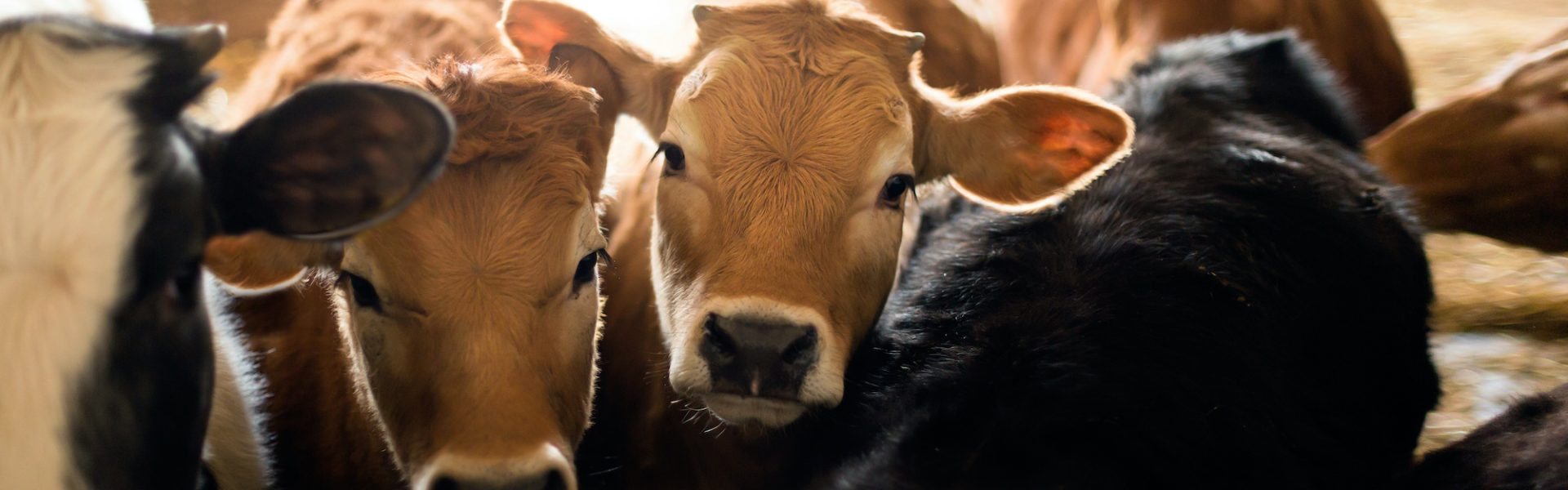
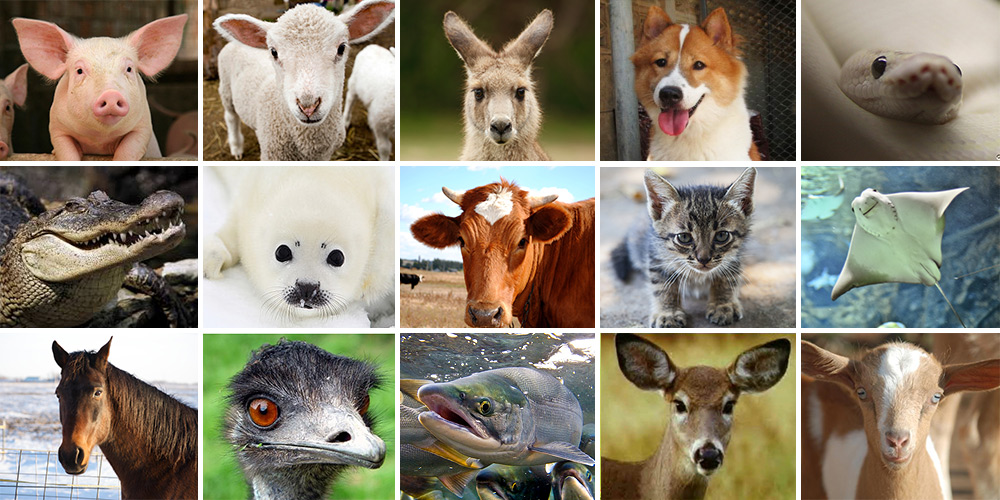
A wide variety of animal species are killed to make leather — most notably cattle, but also pigs, goats, sheep, crocodiles, snakes, sting rays, seals, rabbits, emus, deer, fish, kangaroos, horses, cats and dogs. Even baby animals don’t escape the leather industry — with the skins of calves, kids and lambs considered a particularly ‘valuable raw material’ by the industry because of its softness.
This image contains content which some may find confronting
There are many victims of the leather industry whose skins are used to make products for the sake of profit.
Hundreds of thousands of days-old ‘bobby’ calves born into the dairy industry are slaughtered every single year in Australia, and some of their skins are then used to make boots, bags and other products for the fashion industry. Even unborn calves (called ‘slinks’), whose pregnant mothers are killed in slaughterhouses, may be skinned too. The skin from these premature animals is unfortunately particularly sought-after — but if more consumers knew who was behind the leather products, many would likely choose kinder alternatives.
Leather is a co-product, not a by-product
Whilst it’s true that some animals are killed for their meat and their skin (such as cattle and sheep), their skin can still represent a significant portion of the income made on the sale of their body parts — contributing to the overall commercial viability of the enterprise.
So, leather is rather a ‘co-product’ of the meat industry (not just a ‘by-product’), and may contribute to driving demand for more animals to be raised and killed.
Australian animals used for their skin endure cruelty
Caught up in profit-driven industries in Australia, animals like cattle and sheep are denied the same legal protection given to most other animals. As a result, these sensitive animals are routinely subjected to painful procedures like castration, de-horning, branding and mulesing — often without any pain relief.
These animals are also raised on such large and remote stations that monitoring and care for them is infrequent — and injured and sick animals may be forced to suffer for long periods in pain, untreated and unnoticed.
And ultimately, all animals used for their leather must face the stresses of slaughter.
Even native animals are slaughtered for their skins
Kangaroos — one of Australia’s most iconic animals — are killed each night, with their skins used to make sports shoes, gloves, accessories and souvenirs. Tragically, during the commercial killing of adult kangaroos, thousands of dependent joeys become ‘collateral damage’ of this brutal slaughter. Considered a ‘waste product’ to the commercial industry, joeys are either decapitated, bludgeoned to death, or escape only to starve without their mothers who were killed for their skin and meat.
The commercial kangaroo killing industry is the biggest land-based slaughter in the world.
Leather made from kangaroo skins is referred to as ‘K-leather’ by the industry. Buyers and sports enthusiasts often don’t know that what they’re wearing is fuelling this senseless trade in a big way. The Australian Government has tried to sell the issue of kangaroo skins as a ‘solution’ to an ‘overpopulation’ of kangaroos in Australia — but there is currently no accurate population data, making the slaughter of kangaroos not only cruel, but completely reckless.
The Australian and global community is outraged, and has placed pressure on sporting brands to end this barbaric slaughter. This has been effective, and global sporting giants Nike, Puma, and Adidas have announced they will shift away from this cruel wildlife trade.
We know that kangaroos are used for meat, particularly pet food, but the skin trade is the whole thing. The commercial killing of kangaroos couldn't stand up on its own two feet without the skin trade.
Emma Hakansson, Founder of Collective Fashion Justice
Defend the Wild Podcast - Episode 4
Australia’s crocodiles are killed by the thousands
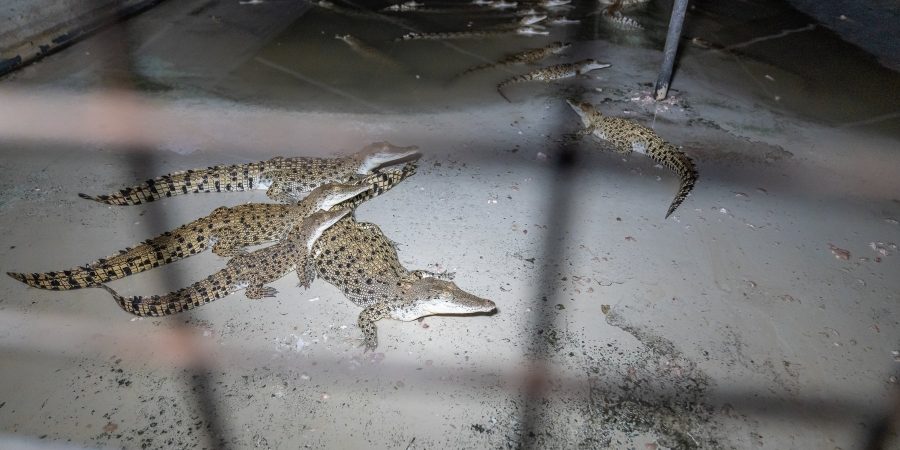
Australia slaughters just over 150,000 crocodiles annually, and fuels 60% of the world’s crocodile skin trade. These sentient animals are both stolen from the wild and bred in cruel factory farms in Australia’s top end.
Crocodiles are kept in barren, concrete pens that reflect nothing of their wild habitats, until they are slaughtered at just 2-3 years old. It takes the suffering and slaughter of 3-4 crocodiles to make just one Hermes birkin bag. The crocodile skin industry’s claims of ‘conservation’ and ‘humane’ practices are nothing more than a deceptive greenwashing tactic. In reality, it ruthlessly profits from the undeniable suffering of thousands of crocodiles per year.
This image contains content which some may find confronting
Most people are shocked to learn that crocodiles are kept in what can only be described as 'factory farms' in Australia, only to be killed at a young age for their meat and skins.
Image credit: Farm Transparency Project
The animals behind imported ‘leather’ also suffer a grim fate
Australia also imports leather and leather products from various countries — including some with no animal welfare laws, and appalling track records of animal cruelty.
China, the world’s largest exporter of leather, kills millions of cats and dogs for their skin and meat every year. India’s leather trade is also one of the biggest in the world. As many of the country’s provinces forbid the slaughter of cows considered sacred, these animals are often forced to walk long distances across borders to be brutally killed in neighbouring provinces and countries. Along the gruelling journey, exhausted animals can be treated in appalling ways to force them to keep walking.
There is no requirement to label leather products, making it extremely difficult and often impossible for a consumer to ascertain which species of animal the ‘leather’ has come from, and in which country the animal was raised and killed for their skin.
People and the planet also suffer for leather production
The the tanning methods used to turn skin into ‘leather’ can involve an array of toxic chemicals which permanently alter the protein structure of the skin.
Workers in some international tanneries have been documented suffering from skin diseases and respiratory illnesses caused by exposure to tanning chemicals. These chemicals, including chromium salt can also cause extreme pollution to air, soil and water, resulting in devastating effects to local human and animal populations.
There are kinder, animal-free leathers that exist right now!
There is no such thing as ‘renewable’ or ‘sustainable’ animal-derived leathers. As more people become aware of the true cost of leather to animals, people and the environment, demand is growing for kinder alternatives.
Organic and sustainably sourced cotton, linen, hemp, and man-made cellulosic materials derived from plant matter are all fantastic and commonly used raw materials. There are also some lesser-known ‘leathers’ growing in popularity, like apple leather, processed mango waste, mycelium and other bio-materials; these can even be embossed to replicate the scales of crocodiles while leaving these magnificent and beautiful animals to live in the wild where they belong.
Newer technologies are giving rise to more eco-friendly, plant-based materials, and many retailers and brands now offer a range of leather-free bags, shoes, and clothing that are fashionable and cruelty-free.
You can make a difference for animals
Tread softly for animals and the planet by choosing cruelty-free alternatives to ‘leather’, and encouraging those around you to do the same! Here are three simple ways you can help today:
Be a conscious consumer – When in-store, check product labels, and encourage local retailers to stock kinder alternatives. Online, there are plenty of great stores that specialise in cruelty-free shoes, handbags, and other apparel.
Dehorning is one of the most traumatic experiences cattle are forced to endure. Both male and female calves usually undergo this surgical procedure without anything to dull the pain.
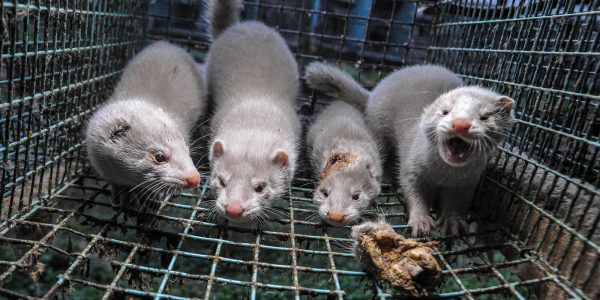
Eighty-five percent of the fur industry’s skins come from animals raised in ‘battery’ cages2, where animals are deprived of any form of quality of life and the ability to perform their natural and instinctual behaviours. Mink live solitary lives and…