Making sense of egg labels

Making sense of egg labels.

Free range. Cage free. Barn laid. RSPCA Approved. Organic. How much do these labels really tell us about how eggs are produced?

Animals Australia

Animals Australia team

Last updated February 12, 2026

Supermarket shelves are filled with reassuring words — but what do they actually mean for the hens behind the label?

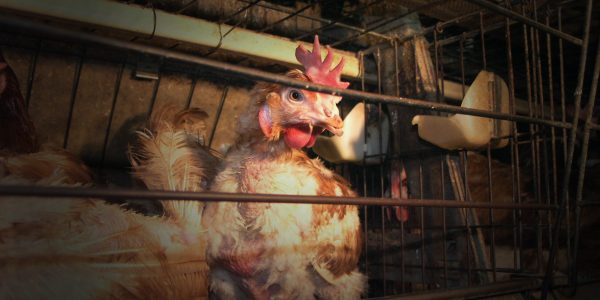
Most Australians want to make kinder choices at the supermarket. Yet the reality for hens and their chicks is far less clear than the labels on egg cartons suggest. Millions are still confined in cages, with their eggs hidden in everyday food products. Others live in crowded sheds. All male chicks are killed shortly after hatching. And every laying hen is considered “spent” long before her natural life would end.

To help make sense of it all, this guide breaks down what egg labels really mean — and what they don’t — so you can make truly informed, kinder choices next time you shop.

Standards and certification systems included in the table:
  • Industry standard outlined in the Model of Code Practice (MCoP)
  • RSPCA Approved Farming (RSPCA)
  • Free Range Egg Producers Australia (FREPA)
  • Coles own brand specifications
  • Woolworths own brand specifications
  • Australian Certified Organic (ACO)

Cage (MCoP) 1

Barn-laid or ‘Cage Free’ (MCoP) 1

RSPCA Approved 2

FREPA 3

Coles/Woolworths Own Brand Free Range 4

Australian Certified Organic 5

1 Australian Animal Welfare Standards and Guidelines for Poultry (2022) – still to be regulated by each State.
2 RSPCA Approved Farming Scheme Standard – Layer hens (2020). Includes Free Range and Barn/indoor systems.
3 Free Range Egg & Poultry Australia (FREPA) Standards (2015).
4 Coles Policy 03 Animal Welfare (2013); Woolworths Animal Welfare Policy version 5 (2021).
5 Australian National Standard for Organic and Bio-Dynamic Produce (2022).
6 As a result of the National Information Standard on free range eggs, which came into effect in April 2018, farmers can keep up to 10,000 hens per hectare and still label their eggs as ‘free range’. This is much higher than the 1,500 hens per hectare stocking density specified for free range layer hens in the Model Code of Practice — Poultry. The outdoor stocking density must be prominently displayed on the packaging.
7 The minimum requirement of 1 nest box per 7 birds or 1m3 nest boxes per 120 birds is the same for the MCoP standards and RSPCA Approved standards.
8 ‘Debeaking’ or beak trimming involves lasering or cutting off the end of a hen’s beak in an attempt to limit the injuries caused by hens pecking each other when they inevitably become frustrated in their confined, densely packed living spaces. A chicken’s beak (as in all birds) is a complex sensory organ and they need it to make fine tactile discriminations — grasping and manipulating food, and in nesting, exploration, drinking and preening. A hot blade or infrared laser is usually used to perform the procedure and it is undertaken without the provision of any pain relief.

Making sense of terms and labels

These are the logos and terms behind the certification schemes outlined in the above table. It’s not an exhaustive list of the brands behind egg products but instead a snapshot of some of the most common accreditation labels you’re likely to see in the supermarket.

‘RSPCA Approved’

The RSPCA Approved farming system accredits egg farms to RSPCA standards. Barn-laid eggs can be RSPCA Approved, therefore not all RSPCA Approved farms allow hens access to an outdoor area. The description ‘barn laid’, ‘free range’ or ‘outdoor’ on RSPCA Approved egg cartons will indicate if the hens had access to the outdoors or were confined indoors (barn laid).

RSPCA Approved

‘Free Range’

Conditions in free-range egg farms can vary dramatically. Smaller-scale producers might stick to the 1,500 birds per hectare as the guidelines recommend, but regulations endorsed in 2018 allow farmers to keep up to 10,000 birds per hectare and still label their eggs as ‘free range’. Check the egg carton for the stocking density, which must be clearly printed.

Along with RSPCA Approved free-range eggs, this logo also indicates that the eggs have come from hens raised on a true free-range farm.

Free range

‘Certified Organic’

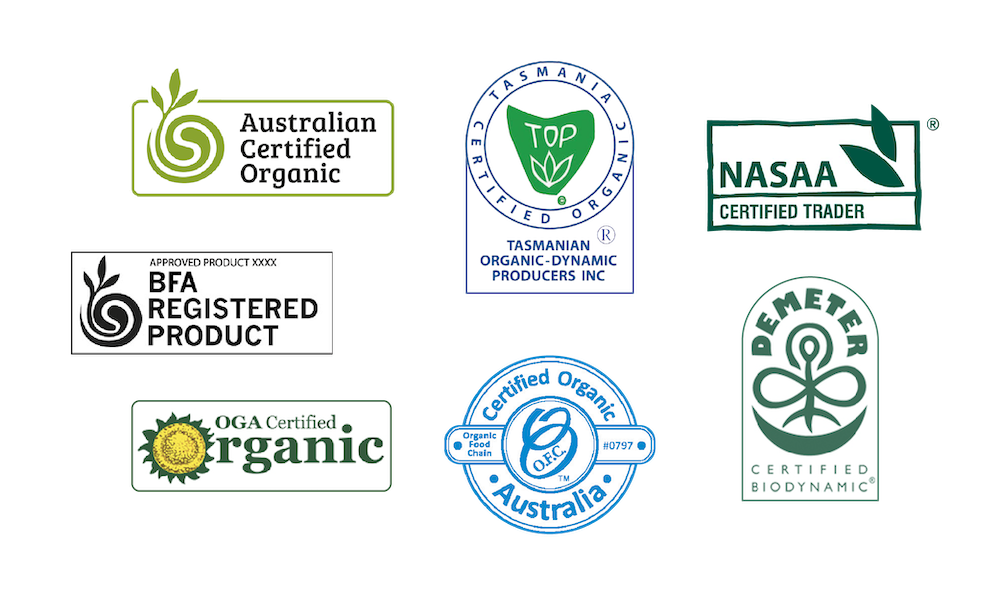
Certified organic eggs come from hens kept on farms that meet or exceed the standards of the best free range facilities. However, simply the word ‘organic’ on an egg carton can sometimes mislead people to think the welfare of hens meets certified organic standards, when it may merely mean that hens in barns are fed organic grains.

These are some of the logos that indicate that the hens are raised on a certified organic farm.
Certified Organic

‘Barn laid’ or ‘Cage free’

Hens in barn-laid housing systems are not confined in cages, so they can move around — but high stocking densities can restrict their ability to move freely and exercise. Being confined indoors also restricts their freedom to express natural behaviours that provide them with a life worth living. Barn-laid eggs may also be labelled as ‘cage-free’.

Other claims on egg cartons

There are many other marketing terms used on egg cartons to imply higher welfare. These labels should be read discerningly. Terms such as ‘Vegetarian’, ‘Eco eggs’ and ‘Omega 3 eggs’, for example, are not recognised descriptors of the type of housing system or a level of welfare for hens.

The term ‘Cage-free’ is also regularly used, but it is important to note that these hens are raised in barns and do not have access to the outdoors.

Likewise, don’t be misled by clever imagery — some cartons may depict birds sitting on nests, or in green rolling fields, but unless accompanied by an accreditation label, these images are most likely inaccurate.


Suffering in all egg systems

There are ethical and welfare issues common to all egg production systems, including free-range and organic.

All egg systems face a universal ‘problem’ in the hatching of chicks to be raised for egg laying. Since only female chickens lay eggs, male chicks who have no commercial value to the egg industry are routinely and legally gassed or ‘macerated’ (ground up alive). Every year, for millions of chicks in the Australian egg industry, their first day of life is also their last.

This image contains content which some may find confronting

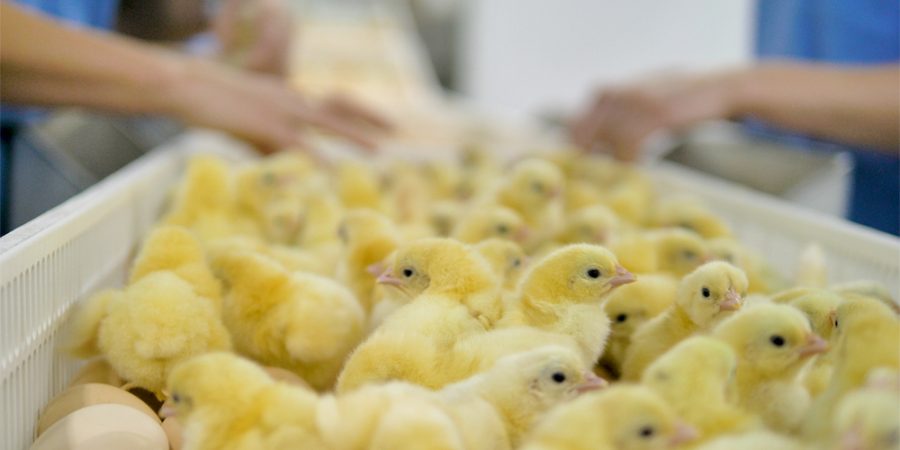
These newly hatched chicks are being sorted by sex. All of the males (and the ‘unviable’ females) will be killed by gassing or in a macerator because they are considered 'worthless' to the egg industry.

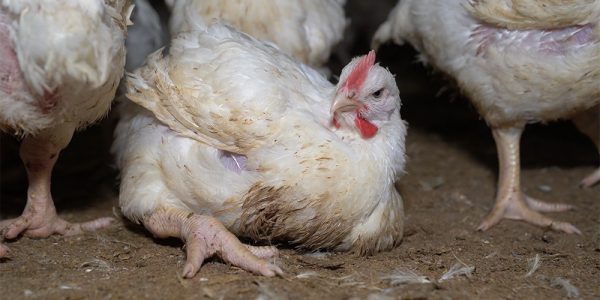
Another often-overlooked reality of commercial egg production is what happens when hens are considered ‘spent’. Hens can naturally live for around 10 years, yet in every egg system — cage, barn or free-range — most are sent to slaughter at just 18 months old, once their egg production slows. In some free-range systems, hens may be kept for one additional laying season if it’s commercially viable, giving them roughly another year of life — still only a fraction of the lifespan they would have had naturally.

Ultimately, all ‘spent’ hens will be trucked to the same slaughterhouses. From when they’re caught (called ‘de-population’) to when they’re transported and eventually slaughtered, it is a process that is terrifying and painful for the birds.

What’s the kindest option?

Current demand for eggs in Australia can only be met by factory farming — whether the birds are confined to cages, or inside crowded sheds for their entire lives. But when people understand the reality, many choose a kinder path.

We didn’t build this system, but we can help change it. And one of the most powerful ways to do that is through what we choose to eat.

If you’re ready to be part of that shift, explore simple swaps, easy recipes and practical tips at VegKit.com, or download your free Veg Starter Guide — and discover how delicious and empowering choosing egg-free can be.