A pineapple farm, focussed on one pineapple in the row.

This new material proves pineapples can do everything leather can — without harming animals!

Fashion just got kinder to cows and the planet.

Animals Australia

Animals Australia team

Last updated July 12, 2016

It looks, feels and behaves like leather, but there’s one very exciting difference — it’s made from pineapple leaves. Since these leaves are ordinarily cast aside by pineapple farmers and left to rot, no extra land, water, fertilisers or pesticides are needed to produce this versatile new material.

Designer Carmen Hijosa has found a way to turn a waste product into a sustainable and cruelty-free alternative to leather — innovation at its best!

It’s called Piñatex, and already, furniture, accessory and shoe companies (including Puma) are working on prototypes with this durable textile. In fact, shoe company NAE have some Piñatex sneakers on the market already and you can already get your hands on them.
This image contains content which some may find confronting

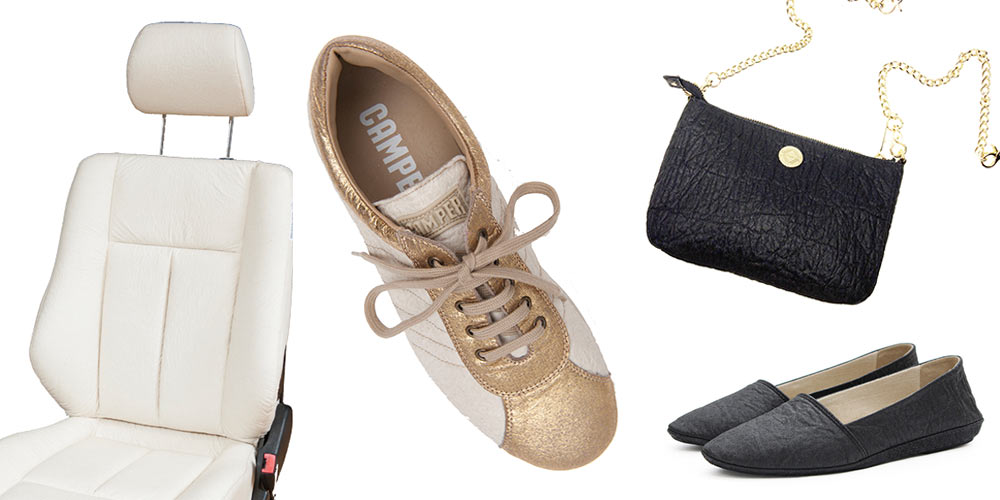
The possibilites for Piñatex are endless. Images thanks to Ananas Anam. Shoes at bottom right by Po-Zu.

This ground-breaking idea was born when Carmen Hijosa went to the Phillipines to oversee the making of leather as part of her job. It was here that she came to the realisation that traditional leather simply wasn’t sustainable and she started looking for what the country had to offer as an alternative. Piñatex provides additional income to farmers and has created a new industry for countries that grow pineapples.

Once we've got these processes perfected, we can bring them into any other country that grows pineapples. So we can actually bring Piñatex all over the world.
Carmen Hijosa
Ananas Anam

Unlike traditional leather, Piñatex creates no suffering. The tanning process for animal skins uses toxic chemicals that can be harmful to both people and the environment.

And it’s animals who pay the ultimate price for leather. While cows and bulls are primarily associated with leather, many other animals are killed for their skins as well, including pigs, goats, crocodiles, snakes, kangaroos, seals and more.

Whilst some of these animals are also used by the meat industry, leather can represent a significant portion of the profit to be made from killing an animal — this means it’s a co-product, not a by-product, having a direct influence on the demand underpinning the farming and killing of animals.

At a time when many Australians are actively reducing their meat consumption to help protect the environment and show compassion to animals, we can look to the materials we use to make a difference in these areas as well. And with innovative materials like Piñatex entering the market, it has never been easier to make cruelty-free and sustainable choices.

Watch now: The secret life of cows

There's so much more to cows than we usually get to see!

Learn more about kinder materials