It has been estimated that between 86–181 billion farmed fish were slaughtered globally in 2022 alone[1]. This staggering number of lives doesn’t include the animals who died in farms before being slaughtered, nor fish who were used as feed for the farmed fish.
Before buying or eating fish from a farm, here are some important things to consider:
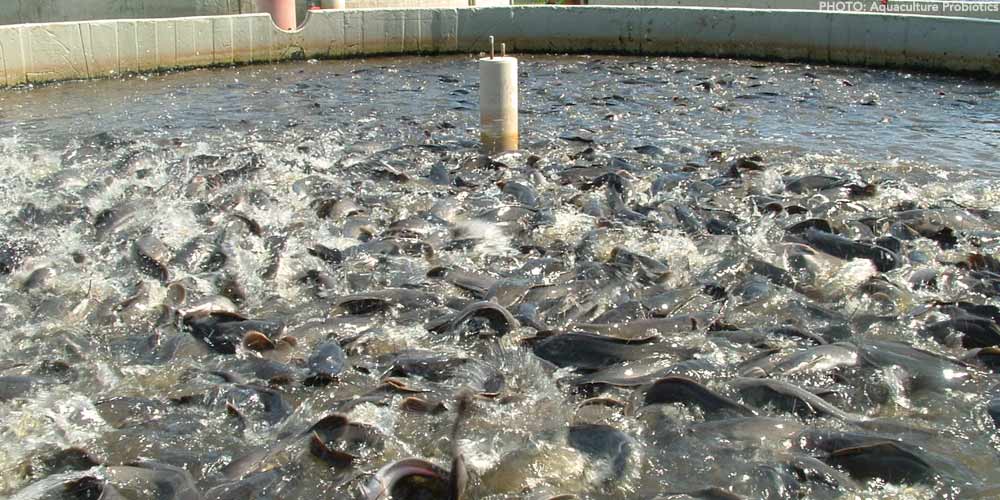
1. Fish farms are underwater factory farms
The consumer demand for animal products has led to intensive farming practices that treat animals like ‘product-producing’ machines, instead of the sensitive individuals they are. And just like factory farms on land, fish farms raise the same concerns: animals in these farms suffer both physically and psychologically, and the surrounding environment suffers too. Learn about what the labelling on salmon available in stores tells you about their welfare.
2. Fish in farms are eating up wild fish
Tuna and salmon are carnivores. And just like other farmed animals, they eat more than they produce.
Every year, millions of anchovies, sardines and other small fish are caught from the ocean to be fed to fish in fish farms. Australia’s largest salmon farmer, Tassal, uses 100kg of feed – including fishmeal and fish oil as well as soy, wheat and canola – to produce 48kg of farmed salmon.
3. Seals are being shot at and bombed
Naturally, seals are drawn to these underwater fish farms as a food source. In an effort to deter them, some fish farms fire beanbag bullets at seals who approach the farms, or use sedation darts or explosive charges or “crackers”. There have been incidences of seals being blinded and deafened and even killed as a result of these ‘deterrent methods’.
Tasmanian Government records show that in 2025 salmon farming operations used 3,477 explosive ‘seal crackers’ and at least 81 beanbag rounds on wildlife. The same records identify the deaths of 51 birds, eight seals and five dolphins at salmon farming facilities.
As fishing trawlers deplete fish populations, seals are naturally in search of food – so fish farms naturally draw their attention. To try to keep these seals away, the industry uses a range of 'deterrents' – some of which can harm or kill native and protected seals.
4. Fish flesh can be dyed pink
Some fish farms are trying to reduce the number of wild-caught fish they use by substituting vegetables, chicken and other land animals into fish feed. This change in salmon’s natural diet makes the flesh of salmon turn an unappealing grey colour. So, salmon farmers include a synthetic compound called astaxanthin in fish feed which dyes fish flesh the pink colour consumers expect salmon to be.
5. Many trapped fish suffer from disease
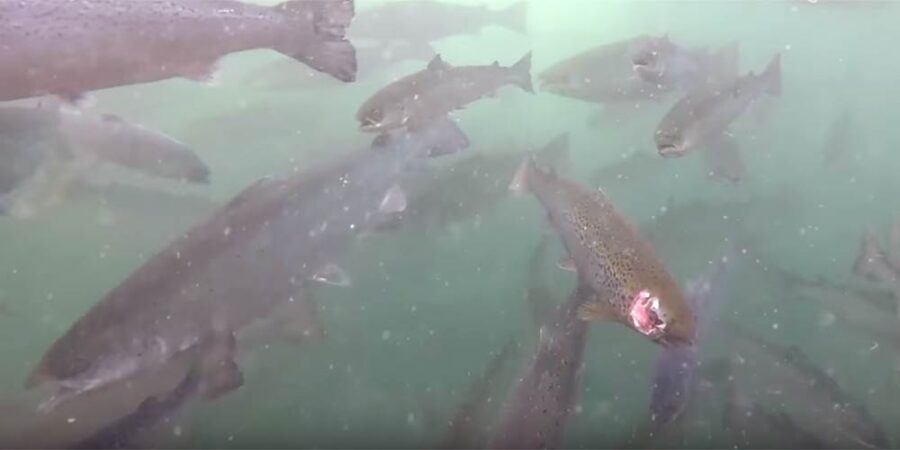
The cramped environments in fish farms allow for disease outbreaks as parasites spread rapidly from fish to fish. Amoebic gill disease is a parasite that thrives in warm water, making it a common threat to fish in Australian farms, particularly during summer[2].The parasite deteriorates their gills, making it difficult for fish to get enough oxygen, eventually causing heart collapse and death if left untreated.
There is a range of other viruses, bacteria and parasites which can affect fish in farms, often with tragic results[3]. In 2018, more than 1 million fish died from Pilchard orthomyxovirus (POMV) in fish farms in Tasmania. And in 2025, a staggering 4 million fish died — and drone footage captured live, twitching salmon being sealed inside a bin and left to suffocate among the dead.
This image contains content which some may find confronting
Image credit: Sea Shepherd Conservation Society
6. Some fish farms add antibiotics to fish feed
Antibiotic resistance is an enormous threat to human health. Still, pigs and chickens confined in factory farms can be fed antibiotics routinely – whether they are sick or not. And fish farms are also using antibiotics in fish feed.
In the summer of 2025–26, Tasmania’s salmon industry used 5.4 tonnes of the antibiotic florfenicol to treat bacterial disease. The emergency permit allowing its use was suspended in March 2026 after the regulator concluded there was an unacceptable risk of residue exposure to non-target species. Low-level residues had been detected in wild fish many kilometres from salmon farms.
Read enough and want to make kinder choices for our sea friends?
Every time you choose to leave animals off your plate, you spare them from cruelty and slaughter. Whether you aren’t sure where to begin when it comes to plant-based eating, or are simply after more inspiration to expand your veg dish repertoire, our free Veg Starter Kit is a great place to start!
7. “Bathing” fish is a stressful and dangerous practice
Amoebic gill disease can be washed off fish in a process called ‘bathing’ which involves pumping fish through a tube into a freshwater tank, and then returning them to their sea pen. In summer months, fish may be forced to endure this ‘bathing’ process as often as every 30-40 days.
Processes like this are very stressful for fish and can result in injuries and mortalities, and in some instances mass deaths. In 2016, more than 175,000 salmon were killed ‘by accident‘ during treatment for sea lice in farms in Scotland. In 2018, a Tassal farm in Tasmania killed 30,000 fish during a ‘bathing’ treatment, citing ‘human error‘ as the cause.
8. Fish farms pollute the seas
Many off-shore aquaculture operations let faeces and food waste fall directly into the ocean below. The build-up of this waste can destroy marine ecosystems on the sea floor below, before eventually flowing into the ocean.
9. These ‘factory farms’ can infect wild fish populations
As many fish are farmed in sea cages in the open ocean, the prevalence of diseases in fish farms is a serious threat to ocean ecosystems as disease can spread into surrounding waters and infect wild fish populations[4].
10. Mass deaths of sensitive individuals
On top of the risk of death from disease, salmon are sensitive to environmental changes such as temperature spikes and dips in oxygen levels. The build-up of waste on the sea floor under fish farms can negatively impact oxygen levels, as can the stocking density of fish, water flow, water temperature and a range of other factors. When oxygen levels drop, fish become stressed and struggle to breathe. In 2015, 85,000 salmon suffocated to death in a salmon farm in Tasmania due to a change in oxygen levels.
Atlantic salmon prefer cool waters and in the wild, they can migrate huge distances to find temperatures where they can thrive. In farms, their movement is restricted to pens, and when the temperature rises, they have no escape.
In 2025, at least four million salmon died prematurely in Tasmanian fish farms. More than one million died in February alone during a mass mortality event in the lower D’Entrecasteaux Channel. The Tasmanian Government says unusually warm waters and the bacterium Piscirickettsia salmonis contributed to the event.
During Tasmania’s 2025 mass mortality event, drone footage showed live salmon being siphoned into containers alongside dead fish and the lids sealed. RSPCA Australia described the handling as inhumane and, following an investigation, withdrew Huon Aquaculture’s RSPCA Approved certification.
11. Fish suffer from depression
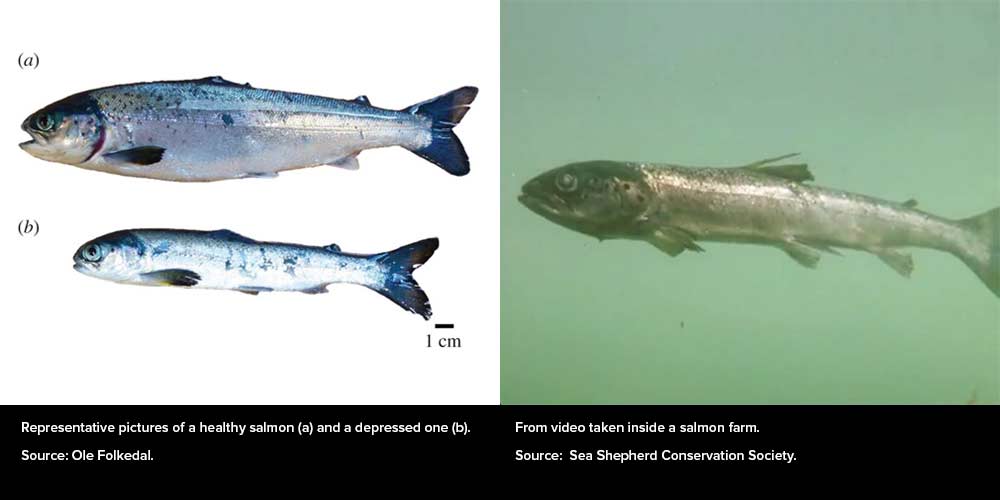
As many as 1 in 4 fish in fish farms show signs of severe depression and simply “give up on life”. These fish have stunted growth and can be seen floating lifelessly at the surface. The research concluded that depressed fish exhibit behaviours and brain chemistry almost identical to those of very stressed and depressed people.
This image contains content which some may find confronting
Fish are more intelligent than many people give them credit for. They even have friends! Living in crowded tanks where they have to compete with others for food and swim monotonously in circles is a stressful and unnatural environment for a fish. Just like pigs and chickens in factory farms, fish in farms live a life of suffering.
12. Escapees from fish farms could be a threat to local ecosystems
Fish can escape from sea pens through storms, net tears and other failures. In Tasmania, salmon farmers must report any escape involving more than 500 fish in a single event.
Between 2000 and 2006, a total of 208,000 salmon were reported to have escaped in Tasmania in 11 escape episodes [reference id=”5″]. In 2018 one incident unleashed 120,000 salmon into Tasmanian waters, and 2020 saw yet another outbreak occur, with the escape of 50,000 Tasmanian farmed salmon — giving further rise to fears among environmentalists that the breach could potentially “pollute” the marine environment and seriously impact local ecosystems.
There is little research done into the impacts and fate of farmed salmon being released into Australian waters but some research suggests that, as carnivores, they could decimate wild fish populations. Others suggest that they are unable to survive in the wild and slowly starve to death.
Eating kindly, for fish and all animals
Just like pig and chicken farms, fish farms eat up resources, create tons of waste, and inflict a huge amount of suffering on each individual animal.
The most compassionate choice is to leave sea animals off your plate. By reaching for animal-friendly alternatives, you can help spare sensitive fish from a life of misery in an underwater factory farm, and reduce the demand that has led to the farmed fish industry endangering native and protected sea animals like seals.
Learn how to fill your plate with nutritious – and delicious – plant-based food with your free Veg Starter Kit!
BREAKING NEWS: We've lodged formal complaints calling for an immediate investigation into potential breaches of Tasmania’s Animal Welfare Act across the state’s salmon farming industry.