
BREAKING UPDATE: Animals Australia investigation sparks Bali Government commitment to close the Bali dog meat trade…
An Animals Australia investigation into the Bali dog meat trade documented dogs without homes and family companion animals being captured and killed by strangulation, beating and poisoning. Their meat, butchered in filthy conditions, was destined for restaurants and street vendors — and even unsuspecting tourists.
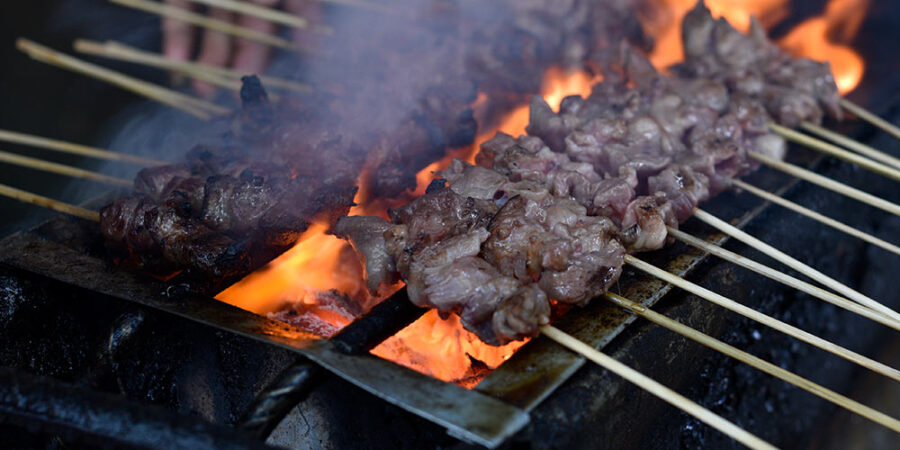
Part of Bali’s appeal for tourists is cost-effective accommodation and food, but most tourists have no idea that the letters “RW” on the outside of popular street food stalls indicate that dog meat is being served. Mobile dog meat vendors also actively targeted tourists on beaches, offering satays from tubs. They are deliberately not disclosing that they are selling dog meat.
If having a healthy, happy holiday in Bali is a priority, then it’s important to understand what to look out for…
This image contains content which some may find confronting
This image contains content which some may find confronting

The dangers of eating meat in Bali don’t end with dog meat…
A health and welfare disaster is brewing in the island’s slaughterhouses. Pigs, cows and chickens were found to be suffering terrible abuse before being butchered in unhygienic conditions.
This image contains content which some may find confronting

Evidence shows that neither animal welfare nor food safety standards are being enforced in Bali slaughterhouses. Abusive treatment like drowning, electric shocks and painful, fully conscious slaughter are routine. Animals are killed, butchered and cut up on dirty floors, with footage from at least one facility revealing eviscerated organs and meat being ‘washed’ in the sewerage-laden stream that passed beside the killing floor.
The failure to enforce health and hygiene laws creates a toxic mix for people in Bali — local community members and visitors alike. If you care about animals, and value health, it’s important you know this so you can make informed decisions about what you eat when in Bali.
Animals Australia is working with the Bali Government to secure the enforcement of laws in Bali to better protect animals and people.
Eat safely — and kindly — in Bali
With unscrupulous Bali dog meat traders caught on film lying about what they’re selling, plus hygiene and slaughter standards not being enforced in Bali’s abattoirs, the safest choice to make while in Bali is to avoid eating meat altogether. Thankfully it’s easy and delicious!
Bali has a vibrant vegetarian food scene, with over 100 veg restaurants on the island. What’s more, most street or beach vendors will happily cook up vegetable dishes (like nasi goreng or veg nasi campur). Check out the Happy Cow website or app for places to eat.
This image contains content which some may find confronting

One important thing to keep in mind — especially in light of the Bali dog meat trade’s connection to tourism — is that wherever we live in the world, every society and every culture has inherited beliefs from those before them about which animals are ‘friends’ and which are ‘food’.
If we can begin to unravel our own conditioned thinking, there is infinite hope for all animals. And every caring person can play a part by choosing to see animals as the individuals they are.
Kinder travel (beyond food choices)
It’s not just animals used for food who suffer for tourism. Here are 6 ways you can help all animals in Bali.