End the use of shark nets and drumlines in Australia.

A whale mother and her calf entangled in a shark net.
Credit: Envoy Foundation / Erin Kirkwood

Marine animals need your help!

A devastating spate of recent humpback whale entanglements has caused outrage across Australia- because they were entirely preventable. Contact the Ministers today who have the power to remove cruel shark nets and drumlines, and implement non-lethal alternatives.

0  letters have been sent.
  • Take action
  • Writing Tips

Choose your target

Your location

Add in your location below so that we can help address your letter to the right target.

Your country of residence (Required)

Loading...


Your Results

select your MP below:

Your Results

Draft your letter

Need help writing your letter?

View 'Writing Tips' section for helpful summary content.

Dear Minister

Regards,

By completing this action, you give permission for Animals Australia to contact you. You can unsubscribe from updates at any time.

Your Letter preview

Thank you!

You are why a kinder future for all animals is possible.

Help us spread the word and encourage others to take this important action for marine animals.

Key Points

Copy and paste any of these key messages into your email to boost your impact!

PRO-tip:

Tap the copy icons below to copy a field to your clipboard so that you can easily paste it into your letter.

PRO-tip:

Tap this icon to copy a field to your clipboard so that you can easily paste it into your letter.

Writing Tips

Use the summary below if you would like guidance to draft your email. To write your email, go to the 'TAKE ACTION' tab.

Issue summary

Along the coastline of New South Wales and Queensland, shark nets and drumlines are set just 500 metres from shore. These devices do not prevent shark encounters, instead, they trap and kill countless marine animals, including dolphins, turtles and whales. Even as many shark species decline along our coasts, they are being hooked, entangled and killed due to fear and misconception. Sharks are vital to healthy oceans – but they continue to suffer needlessly. Urge Ministers to remove these cruel devices and adopt proven, non-lethal alternatives.
Animals Australia

Animals Australia team

Last updated January 8, 2024

Sharks play a vital role in keeping our oceans healthy, and yet these often misunderstood animals are being put at great risk of suffering and death because of misconceptions and fear.

The vast majority of sharks pose no threat to humans – and encounters between sharks and people are incredibly rare. A better understanding of these uniquely fascinating animals will play a vital role in keeping both sharks and people safe – as well as protecting precious marine animals and their ecosystems.

This image contains content which some may find confronting

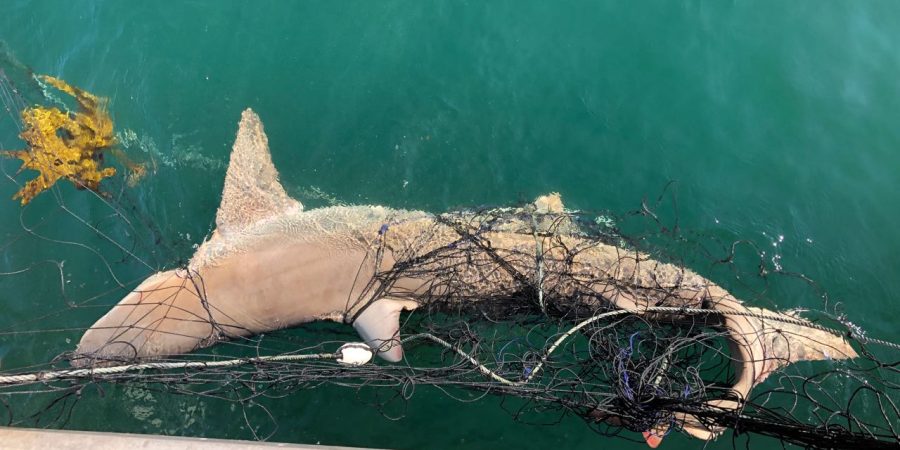
A shark caught in netting.
A shark entangled and killed by a shark net in Australian waters.
Image credit: Envoy: Shark Cull

Why is this an issue?

Coastlines across Australia are becoming increasingly dangerous places for sharks and other marine animals. Despite the fact many shark species are in decline along the coasts of Western Australia, Queensland (QLD) and New South Wales (NSW), they are being caught in nets, painfully hooked and killed in an attempt to reduce encounters with beach-goers.

Every year in NSW and QLD, shark nets and drum lines are set just 500 metres from the beach. While they’re intended to “protect” beachgoers who use the water for recreational activities, these devices don’t offer any protection whatsoever. Shark nets do not create a barrier for people to enter the water, and they barely cover half the depth of the water they are set in. Drumlines are just baited hooks that stand alone in the water. Neither prevents sharks from swimming over, under or around them.

Experts have warned that these cruel measures won’t work, and that they’ll only further decimate the numbers of threatened and endangered species, such as Great Whites, Bull Sharks and Tiger Sharks. If that weren’t bad enough, shark netting and baited hooks also harm and kill countless other marine animals, including dolphins, turtles and whales.

Since the introduction of shark ‘control measures’, thousands of protected sharks – including many who did not pose any threat to humans – have been killed along Australia’s shorelines. With non-lethal control methods already available, such as shark enclosures, deterrent devices and air patrols, it’s time for the governments of QLD and NSW to recognise that sharks don’t deserve to be hunted down and killed.

A cruel death

Drumlines are large baited hooks attached to chains and a buoy to attract sharks. Animals caught on these hooks, including undersized sharks, non-target species of shark, as well as other marine life can suffer for hours before being discovered by patrols.

Shark nets are often submerged along popular coastlines. But, despite public misconceptions, shark nets don’t keep sharks out, they kill them. In fact, many sharks caught in these nets are actually found on the shore-side of the net. Sharks need to keep moving in order to breathe, so when they become tangled in nets and are unable to swim, they may slowly suffocate to death.

This image contains content which some may find confronting

A hammerhead tangled in a shark net off Australia's Gold Coast.
After becoming entangled in netting, sharks (and other marine animals) struggle to free themselves and can endure prolonged suffering and death from exhaustion, suffocation, starvation, or severe injuries.
Image credit: Sea Shepherd

Collateral damage

While shark nets are designed to allow smaller fish through, any number of marine animals, including seals, dolphins, dugongs, and turtles often become entangled, injured and can even drown in nets. In September 2025, nine humpback whales – including mothers and their calves, became entangled in shark nets in Queensland waters during their migration routes. 

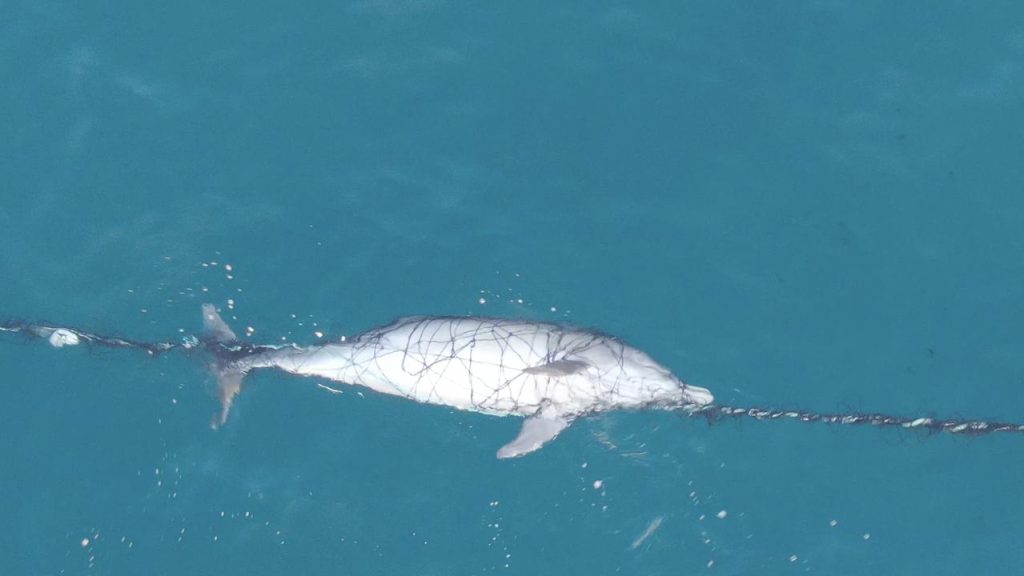
In 2023, a dolphin was found dead, tangled in a shark net off a popular Sydney beach.

According to Humane World for Animals, about five in six animals trapped in Queensland’s shark nets alone are not ‘target’ shark species. There have been 131 whales, 298 turtles and 327 dolphins trapped in them since 2001.

This image contains content which some may find confronting

A dolphin entangled in shark nets, floats lifeless in the water.
Image credit: Drone Shark App

It is not only sharks who suffer due to shark nets – other marine animals, such as this dolphin, can be killed by the nets, too. Image credit: Drone Shark App, sourced from article Sea Shepherd calls on NSW Government to get rid of Bronte Beach shark nets, News.com.au 18 Feb 2023

This dolphin would have been desperately trying to get free, eventually drowning in their own home...
Emilia Michael, chief operating officer at Action for Dolphins

Although baited hooks are less likely to kill non-target species than nets, animals such as dolphins and turtles can still get caught, as can those sharks who pose no threat to humans. In fact, in 2017/18, five species of shark, all considered endangered or threatened, were caught – of the total 130 animals, 104 were killed.

Do shark nets have a positive use?

In short, no – they provide no effective mitigation to human and shark interactions.

Shark nets and drum lines are classified as fishing devices and their use is legislated under Fisheries legislation. Shark nets entangle a vast array of marine life including turtles, dolphins, whales, and even other sharks. Once caught, these animals understandably become distressed and this attracts larger sharks closer to shore for an ‘easy meal’.

Drum lines are fishing hooks, they too just bring sharks closer to shore. We only need to look at Bondi beach in New South Wales for a good example of how ineffective these methods are. Bondi beach spans approximately one kilometre and is “protected” by one 150 metre net, which does not even reach the water’s surface.

The science doesn’t support that these devices work, so let’s stop pretending that this is about the environment and let’s start admitting that this is about politics...
Andre Borell, Envoy Foundation

Avoiding an encounter

Most people will never see a shark at a beach – and the chances of having an encounter with one are incredibly low (in fact you’re more likely to be killed falling out of bed!). However, there are many ways that we can all enjoy Australia’s beautiful beaches whilst improving our personal safety – you’ll find some vital information here.

Ultimately, it’s important to remember that sharks are not the ‘bad guys’they are trying to survive like any other wild animal, and we are simply visitors in their ocean home.

Speak out for sharks

Please urgently contact Ministers in NSW and QLD and tell them that Australia’s sharks need our protection. Encourage them to implement non-lethal alternatives that will help protect beach-goers, sharks and other marine life.