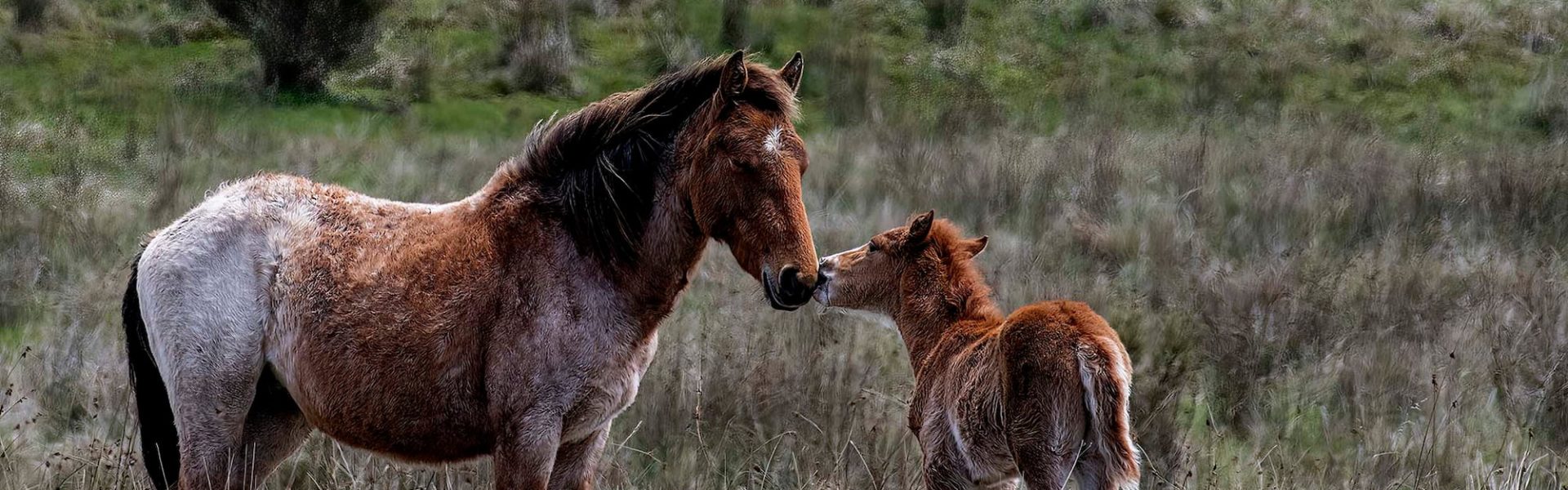
Kosciuszko National Park — the largest national park in New South Wales (NSW) — has long been home to the largest population of brumbies in the country.
In 2019, the Kosciuszko Wild Horse Heritage Act (also known as the ‘Brumby Bill’), was introduced with the purpose recognising and protecting ‘the heritage value’ of wild horse populations within parts of the national park — but only a specific number of horses would be set to benefit from this protection.
In 2021, the NSW Government’s Wild Horse Heritage Management Plan set a target to reduce the wild horse population in Kosciuszko National Park to just 3,000 by June 2027. This number was selected to try to strike a balance between protecting the park and the horses’ perceived ‘heritage value’ to Australia’s history rather than their intrinsic value as sentient animals.
Over 17,000 horses were estimated to be living in the region in 2023, though concerns have been raised regarding the counting methodology. The recent 2024 survey estimated that between 1,579 and 5,717 horses remained — a drastic drop in numbers. In the last several years, many thousands of horses have been shot and killed. Each one was an individual who sought comfort and feared danger.
In November 2025, the NSW Parliament voted to repeal the Kosciuszko Wild Horse Heritage Act, meaning that once the current plan expires in 2027, the limited protections previously offered to some of these horses will no longer exist.
This change means that the remaining horses in Kosciusko National Park will be treated like many other non-native animals in the country, and killed.
The killing of brumbies reflects a deeper and troubling flaw in our laws. Horses do not lose their ability to suffer once they are labelled a pest. Nor do deer, pigs, camels, foxes, goats, birds, donkeys or cats. These are animals who feel fear, pain and joy, and who are simply trying to survive in environments where they have been left with no choice. Failing to recognise this in legislation leaves them vulnerable to cruelty.
While debate has continued about the impact of brumbies on native animals and ecosystems over recent years, the state government simultaneously allowed the Snowy 2.0 Hydro Scheme project in some of the rarest sub-alpine habitats in Australia. The project’s Environmental Impact Statement (EIS) acknowledges the over 1,600 hectares of the region will be ‘disturbed’, and destroy hectares of habitat including that of threatened species.
“To put it in context, that’s the equivalent of saying that we’re going to clear fell all of Sydney Harbour National Park, plus all of Lane Cove National Park, plus all of Kamay-Botany Bay National Park, plus all of Georges River National Park, plus Towra Point Nature Reserve, and a sprinkling of smaller nature reserves.”
— Gary Dunnett, Executive officer of the National Parks Association
That this hydro project was even considered is deeply concerning in an internationally renowned conservation reserve — especially while horses are being chased and shot in the name of ‘protecting’ the habitat.