Australia’s native animals deserve to be valued, protected and treated with kindness — in times of crisis and every day.
Most people expect native wildlife to be protected. Yet too often, human and commercial interests are prioritised, and native animals are treated as resources to be exploited, seen as nuisances to be removed, deemed ‘collateral damage’ of human activity, or overlooked entirely in times of need.
Animals Australia is working to change this.
This image contains content which some may find confronting
Why Australian wildlife need our help
Habitat destruction
Habitat destruction is one of the greatest threats facing Australia’s wildlife — and animal agriculture is the primary driver. Vast areas of precious habitat are still being flattened and converted to pasture for sheep and cattle. This places the need to change our current food system at the heart of wildlife protection: reducing the demand for meat and dairy to help preserve the places native animals call home.
Legislative loopholes and cruel government policies
While wildlife navigate habitat destruction and encroachment, insufficient and harmful government policies actively expose native animals to further harm. Animals whom most people reasonably assume are protected, can legally be shot for commercial profit, killed under state government permit systems, or targeted for “recreation”.
Disasters
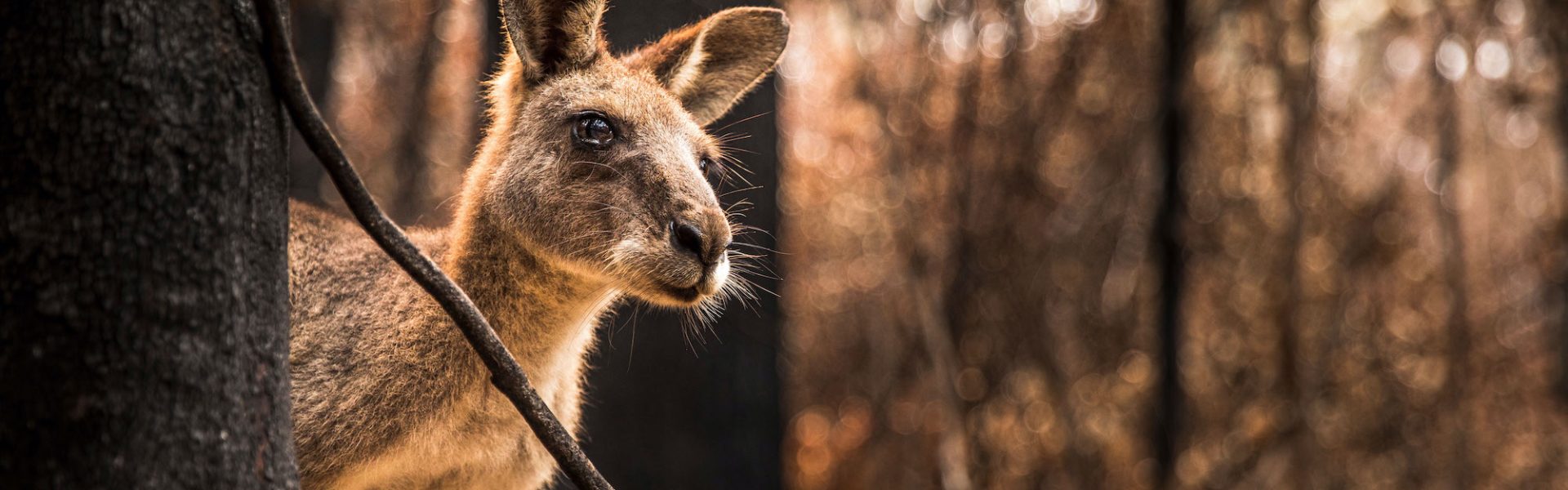
Heatwaves, bushfires, and floods are devastating for all affected. When these disasters strike, wildlife are made even more vulnerable to suffering and death due to the cleared swathes of land, pastureland, and urban infrastructure that fragments forests and woodlands and makes it harder for them to flee. Still, they are not consistently prioritised within formal emergency responses. Too often, injured and displaced animals rely on volunteer rescuers, wildlife carers and veterinarians to reach them in their time of greatest need.
How Animals Australia is helping wildlife
Working to spare kangaroos from profit-driven killing
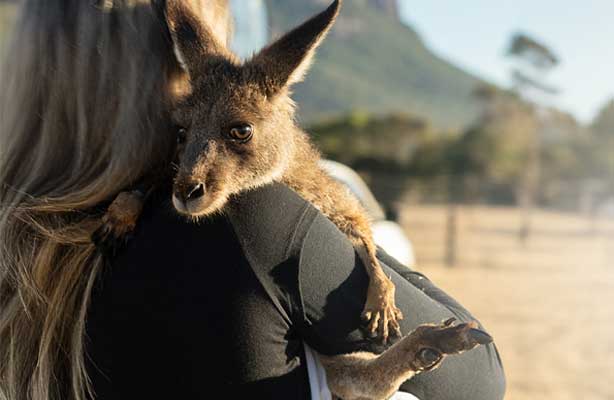
Most people are surprised to learn that kangaroos are victims of the largest slaughter of land-based wildlife in the world — all for the sake of profit. With their meat and skins exported overseas, we’ve taken an international approach to end their suffering.
After almost two years of our online campaign targeting Adidas to stop using kangaroos to make its shoes, the sporting giant announced it was ending its role in the cruel wildlife trade. We’re continuing to raise global awareness and build international pressure for change, opening eyes to the reality of this secretive industry that treats kangaroos as commodities and the shooting and bludgeoning of their young joeys as a ‘cost of doing business’.
Launching our Veterinary Emergency Team
During disasters, native animals are too often overlooked or left without the urgent care they need. To help change this, we’ve launched our Veterinary Emergency Team in collaboration with Vets for Compassion. After fires tore through parts of Victoria in early 2026, the team was deployed for six weeks, alleviating the suffering of hundreds of native animals who may otherwise have been left without help. We are continuing to strengthen this initiative so urgent care can reach more animals in times of crisis.
This image contains content which some may find confronting
Credit: David Nightingale Photography.
Protecting ducks from being shot ‘for fun’
During Victoria and South Australia’s cruel ‘duck shooting seasons’, the usual protections for native ducks and quail are lifted so they can be legally shot for ‘recreation’. Hundreds of thousands of ducks are estimated to be killed each year, and countless more are left to suffer slow, painful deaths from injuries.
Through powerful ads in major newspapers, as well as digital and social media ads, we’re ensuring decision-makers are reminded of these native animals — and that most people want to see them protected — every single day they’re forced to endure suffering across wetlands.
Legal action to end cruel dingo killing
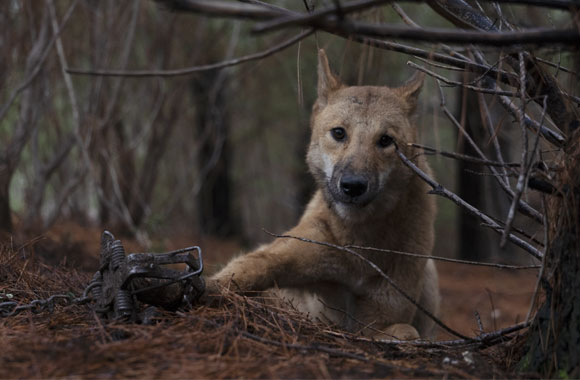
In Victoria, a legislative loophole allows dingoes to be targeted and killed, to appease the interests of the agriculture industry. The high rate of lamb deaths in Australia is due to farming practices, still, the Victorian Government allows threatened, native dingoes to be killed by poison, trapping and shooting. Our Supreme Court action challenges this cruel killing, and seeks to ensure this native species is properly protected.
This image contains content which some may find confronting
Image credit: Defend the Wild / Farm Transparency Project
Protecting flying foxes from ‘convenience’ shooting
State-based permit systems leave flying foxes vulnerable to being legally shot, simply for trying to survive on their native homeland. The Queensland Government recently reversed its commitment to end this cruel practice — despite the cruelty and ecological damage caused by killing one of the nation’s keystone pollinators. With non-lethal methods already available for primary producers, we’re calling on Queensland to join the rest of the country in outlawing the shooting of these unique native animals, some species of which are already threatened.
Protecting wildlife from habitat destruction
The devastating consequences of habitat destruction were laid bare at Cape Bridgewater in Victoria in 2020. In the midst of one of Australia’s most devastating bushfires, habitat that was home to hundreds of koalas was bulldozed to create pastureland. 70 koalas were killed — those who weren’t crushed instantly were found scared and suffering. This distressing case highlighted the ongoing threat our current food system poses to wildlife. That is why our kinder-eating initiative, VegKit, is part of our work — reducing the demand on animal industries to help preserve the habitats native animals need to survive.
Agriculture is a primary threat, but it’s not the only threat. The logging industry also relies on the destruction of habitat wildlife depend on, to keep up with demand for paper and timber products.
In 2026, taxpayer-funded Forestry Corporation NSW was set to bulldoze Glenbog State Forest, a rare cloud forest where citizen scientists identified more than 1,100 wombat burrows and more than 130 greater glider den trees. We’re urging the government to halt the logging on behalf of the wildlife who could be buried alive for the sake of cheap woodchips. With the bulldozing delayed but still planned, our work continues with great urgency.
Our Emergency Grants Program — which helps animals the world over during crises — also helps animals here in Australia. In 2026, we were able to provide rapid response grants to local wildlife rescuers and carers, to purchase supplies and replace critical infrastructure destroyed by the bushfires. Grants also made the distribution of lifesaving food and water drops possible, for wildlife left to survive on charred, barren habitats.
To help flying foxes who are extremely vulnerable during heat events, we helped instigate the first colony sprinkler prototype in Victoria, and provide emergency grants to rescuers and carers saving survivors and returning orphaned animals back to the wild where they belong.
We also provide funding to two national wildlife advocacy organisations, Defend the Wildand Kangaroos Alive, which share our mission of shaping a future in which native animals are properly protected.
For our wildlife, we are both their greatest enemy and their only hope.
Bradley Trevor Grieve
Australian author
How you can help wildlife
Here are simple but powerful ways you can help wildlife today: